What is Superficial X-ray Therapy?
Low-Energy radiation for skin conditions
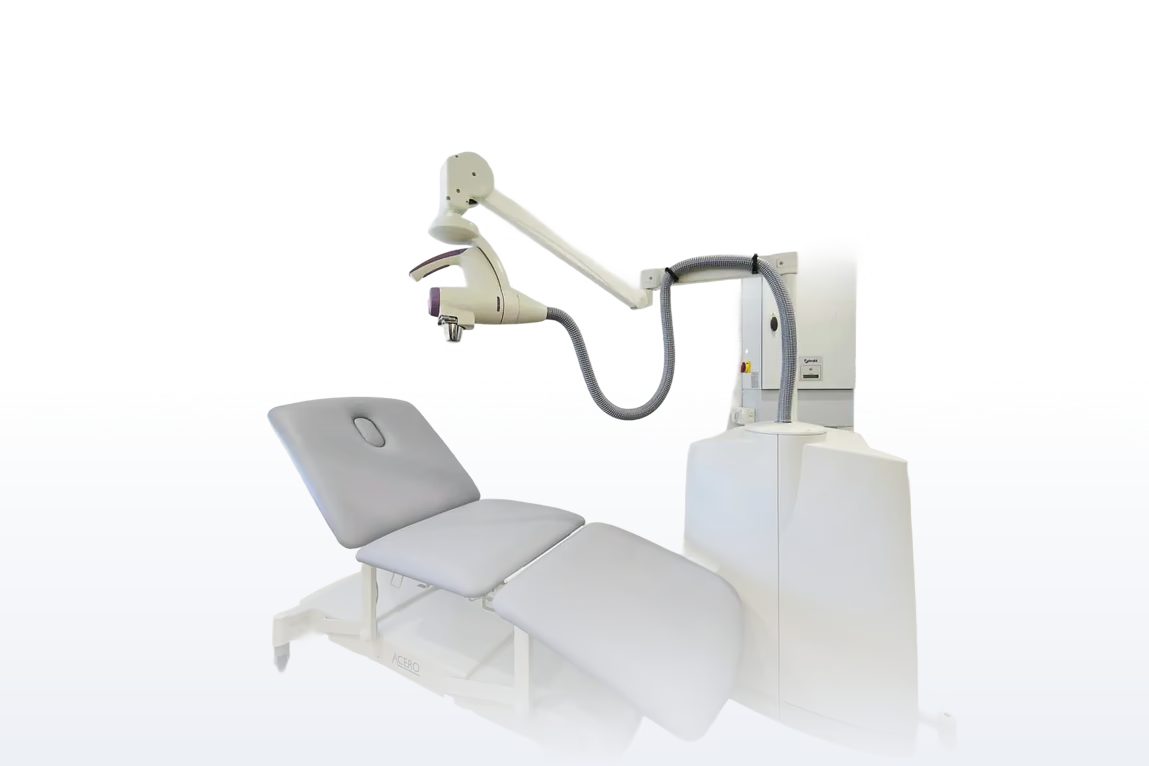
Radiation Works
Not long after the discovery of X rays by William Röntgen in 1895, X rays were used to treat cancer. In the illustrated publication,(1) radiation was used to treat malignant growth successfully. Built on more than 100 years of experience, modern radiation remains a cornerstone treatment in eradicating cancer. The role of radiation in treating skin cancers is undisputed (2,3) and offers results on par with surgery in contemporary publications.
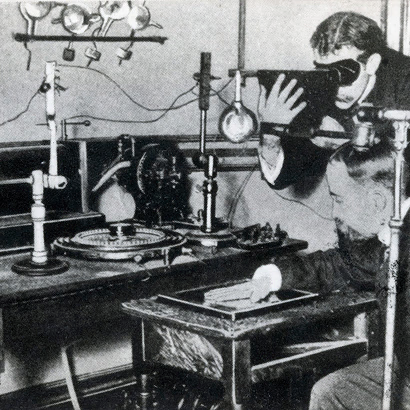
Radiation is Not Mysterious
Radiation is part of the electromagnetic spectrum (4) and in the broadest sense can be considered as light therapy. As the wavelength of radiation decreases and the frequencies increase the radiation transitions from long waves and radio waves to infra-red l light, visible light, ultraviolet light and eventually X-rays.
The X rays have sufficiently small wavelengths to interact on atomic level and if these rays have sufficient energy they are termed ionizing radiation. This means that they can eject electrons from the orbitals of atoms, (in the Böhr atomic model), and these free electrons go on to cause the required DNA damage in cancer.

Radiation Effects Depend on Beam Energy
Low-energy radiation deposits most of its dose at the skin surface and rapidly decreases with depth, while megavoltage beams penetrate much deeper. Our kilovolt energy beams are effective to tissue depths of less than 5mm while megavoltage electron radiation penetrates to at least 5 times this depth.
For this reason, superficial radiation therapy (50–80 kV) is better suited for skin cancer, as it targets the skin with minimal deep tissue exposure. Megavoltage techniques such as VMAT are not ideal for skin treatment. Electron beams can also be effective due to their limited penetration, but practical limitations make superficial radiotherapy the preferred option.
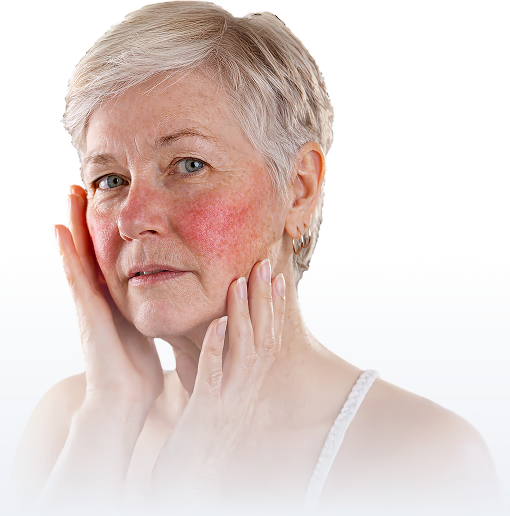
Effect of Radiation Dose and Fractionation
Radiation dose is measured in Gray (Gy), this is the amount of energy deposited in tissue. Delivering radiation in fractions allows normal tissue to repair between treatments, making dose and fractionation key factors in radiation therapy.
In clinical practice, microscopic disease is typically treated with 50 Gy in 25 fractions (2 Gy per fraction), while visible disease requires about 60 Gy in 30 fractions. Using radiobiological equivalence, these treatments can also be delivered effectively in shorter schedules of approximately 10–12 fractions.
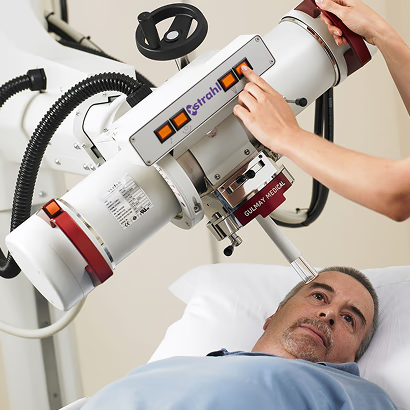
Superficial Xray Therapy for Skin Cancer
Based on the physics of radiation we prefer using superficial radiation for skin cancers. There are many advantages in using superficial radiation and these are:
- XRT treats the skin and relatively spares underlying tissue
- XRT can treat very small lesions with field sizes as small as 15 mm diameter. Megavoltage therapy cannot treat areas less than 40 mm in diameter.
- XRT delivers less radiation to the whole body in comparison to megavoltage therapy and is safer for this reason.
- XRT is an easier process and treatment is uncomplicated in comparison to megavoltage therapy.
- XRT costs less- The capital costs of XRT are a fraction of the costs of megavoltage therapy and this is a good reason to offer XRT in treating skin cancers.
We know radiation. If you have a radiation question why not speak to us.
References
- Lewis RW. THE TREATMENT OF RODENT ULCERS BY RADIATION. Ann Surg. 1926 Aug;84(2):233–6
- Locke J, Karimpour S, Young G, Lockett MA, Perez CA. Radiotherapy for epithelial skin cancer. Int J Radiat Oncol. 2001 Nov;51(3):748–55
- Veness M, Richards S. Role of modern radiotherapy in treating skin cancer. Australas J Dermatol. 2003;44(3):159–68
- https://en.wikipedia.org/wiki/Electromagnetic_spectrum
- http://naweb.iaea.org/nahu/dmrp/documents/slides/chapter_07_treatment_planning.pdf


